Gallery
Image 1 of 1
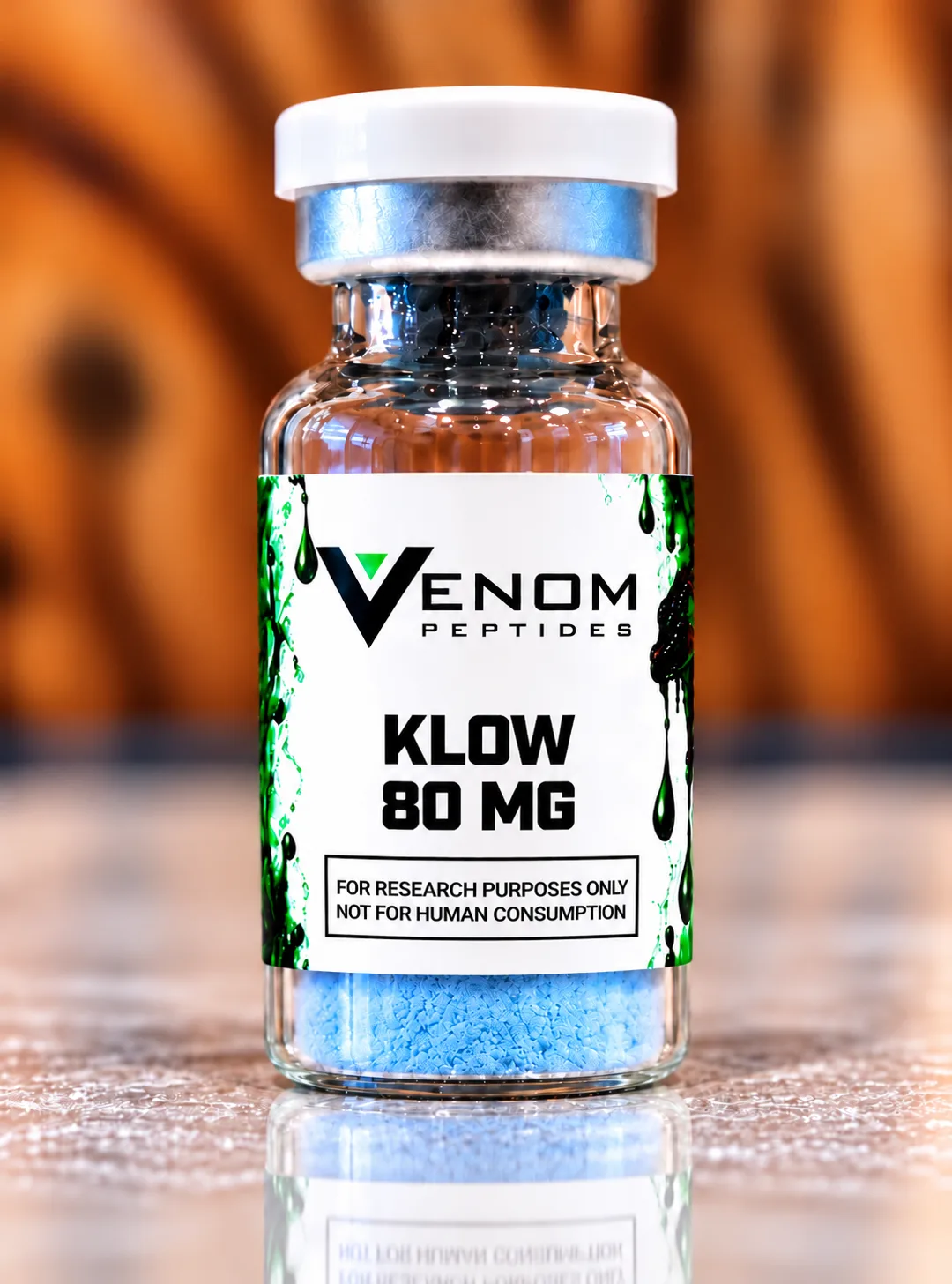
Pause over the product to inspect · Click for full size
Product details
Specifications and handling
KLOW is supplied as bottled lyophilized powder for legitimate laboratory research. Review the selected specification, packaging, storage information and available batch documentation before submitting a purchase request. Not for human or veterinary use.
- Product form
- Bottled lyophilized research powder
- Intended use
- Laboratory research only
- CAS
- Available on request
- Molecular formula
- Available on request
- Molecular weight
- Available on request
- Appearance
- Confirmed for selected specification
- Available sizes
- Default variant
- Packaging
- Confirmed before acceptance
- Batch documentation
- Available
- Third-party testing
- Available by batch
- Storage
- See supplied product documentation
For legitimate laboratory research only. Not for human or veterinary use, consumption, diagnosis, treatment or administration.
1 documented
COA & batch documentation
Review the current documented batch
Open the batch record to review available COA information and original laboratory reports.
- Batch / lot
- KLOW80
- Status
- Available
- Test laboratory
- See record
- Test date
- See record
- Testing provenance
- Supplier-submitted third-party test
- Tests
- See original report
Product overview
Product description
KLOW 80MG | Four-Peptide Research Blend
Product Overview
KLOW 80mg is a multi-peptide research formulation commonly described as a combination of four distinct peptides: GHK-Cu, BPC-157, TB-500 and KPV. Each component has been investigated individually for its role in cellular signalling, tissue biology, inflammatory pathways and related biological processes.
The blend brings together several areas of scientific interest in a single research formulation. However, KLOW is a supplier-defined combination rather than a single naturally occurring peptide, and the formulation itself has not been established as a clinically validated treatment.
Research Areas of Interest
🧬 GHK-Cu | Collagen and Cellular Research GHK-Cu is a copper-binding tripeptide investigated for its involvement in extracellular matrix biology, collagen-related processes and cellular signalling. Research has explored its relationship with skin biology, tissue remodelling and gene-expression pathways.
🔬 BPC-157 | Tissue Biology Research BPC-157 is a synthetic peptide investigated primarily in preclinical studies involving tissue biology, cellular signalling and experimental models of tissue injury. Researchers have explored its potential interactions with vascular and cellular pathways, although robust evidence of therapeutic benefits in humans is lacking.
💪 TB-500 | Cell Migration Research TB-500 is a research peptide associated with thymosin beta-4-related biology. Research involving thymosin beta-4 has examined actin dynamics, cell migration and tissue-repair processes. Findings involving the full-length protein should not automatically be attributed to every TB-500 formulation.
🌿 KPV | Inflammatory Signalling Research KPV is a short tripeptide derived from the C-terminal region of alpha-melanocyte-stimulating hormone. Preclinical research has examined its potential influence on inflammatory signalling pathways, including pathways involved in regulating inflammatory responses.
🔍 Multi-Pathway Research Interest The four components represent different areas of investigation, including extracellular matrix biology, cellular migration, tissue-related processes and inflammatory signalling. Their inclusion in one formulation offers a subject for laboratory investigation, but it does not establish that the components work synergistically or produce superior outcomes when combined.
🧪 Combination Formulation Research KLOW is of interest as a multi-component research formulation. The individual peptides have separate research histories, but the combined product has not been validated through controlled clinical studies. Compatibility, stability, interactions and the biological effects of the complete blend require independent investigation.
Composition and Technical Information
The commonly listed KLOW 80mg formulation contains:
* GHK-Cu — 50mg * BPC-157 — 10mg * TB-500 — 10mg * KPV — 10mg
Total listed peptide content: 80mg per vial.
These amounts describe the commonly marketed composition. Actual contents and ratios should be confirmed against the specific product label and batch documentation, as KLOW formulations are not universally standardised.
Research Status and Important Information
KLOW 80mg is an investigational research blend, not an established medical treatment. The scientific evidence for its individual components varies, and much of the relevant evidence is preclinical. The safety, effectiveness, interactions and long-term effects of the combined formulation have not been established in humans.
This product should not be promoted as a proven treatment for injuries, inflammation, skin ageing or other medical conditions. A research-use designation does not establish product quality, sterility or suitability for administration.
This description is intended for legitimate laboratory research and scientific information only, subject to applicable laws and regulations.
For research purposes only. Not for human or veterinary consumption.